

From Gaza to Ukraine: 2024 - the year of wars
From Gaza to Ukraine: 2024 - the year of wars
As the year draws to a close, Israel's brutal attacks on Palestinians in Gaza and the occupied West Bank continue. Meanwhile, the war between Ukraine and Russia shows no sign of abating, and the long-running conflict remains unresolved.
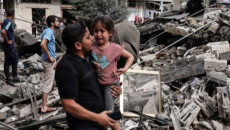
Bloodshed in Gaza and the occupied West Bank has reached unprecedented levels. More than 35,000 Palestinians were killed in 2024, the deadliest year since the Israeli occupation and Zionist aggression began in 1948. Ukraine has also seen its bloodiest period, with 67,000 people killed on both sides in the conflict.
A 60-day ceasefire between Hezbollah and Israel has been in place in Lebanon since late November. But nearly 4,000 Lebanese have been killed this year, and Netanyahu's government has repeatedly violated the ceasefire with targeted strikes under various pretexts.
In late November, Syria experienced a stunning turnaround: a surprise opposition offensive toppled the Assad regime in 11 days. The country has managed to maintain an unusually peaceful state.
Overall, 2024 was a bloody year. According to the Armed Conflict Location and Event Data (ACLED) project, a total of 233,000 people were killed worldwide, a 30 percent increase from the previous year. Deadly acts of violence have doubled since 2019, and one in eight people have been affected by conflict. Among them, Palestinians experienced the "highest levels of violence."
Below is a brief overview of events during the year in four major conflicts: Gaza, Lebanon, Ukraine, and Syria.
Attack on Gaza
The year 2024 was the saddest year in the history of Palestinian suffering, surpassing a century of Zionist repression and massacres.
While intense violence continues, there is hope for a ceasefire between Hamas and Israel as negotiators from both sides meet in Qatar.
Last week, Israeli Defense Minister Israel Katz described the current phase of negotiations as "the closest we have come to an agreement on the hostages since the last agreement," referring to the deal that secured the release of more than 100 Israeli hostages in exchange for Palestinian prisoners in November 2023.
Despite these developments, analysts remain skeptical that Israel's occupation of Gaza will end. The New York Times recently reported that Israel has built 19 military bases in the Mediterranean enclave. In addition, Israeli forces have deployed troops in central Gaza, effectively dividing the territory into northern and southern areas.
Palestinian professor, writer and political analyst Kamel Hawwash sees Israel's expanding military presence as a sign of a "long-term" occupation. "Israel will stay where it wants, because no one can drive it out of Gaza," Hawwash said, referring to US and Western support for Tel Aviv.
Shortly after the events of October 7, Israeli leaders announced their intention to completely expel Palestinians from the Gaza Strip. While Hawwash hesitates to call the ongoing operation an attempt to completely eliminate Palestinians from the Gaza Strip, he notes that Israel "quickly realized that with the help of the US and Britain, they can do anything."
Since October 2023, Israeli attacks have killed more than 45,000 Palestinians, including 14,500 children, and injured more than 106,000. "Almost all 1.1 million children in Gaza are in urgent need of protection and mental health support," UNICEF Executive Director Catherine Russell said in a social media post.
Ukrainian War
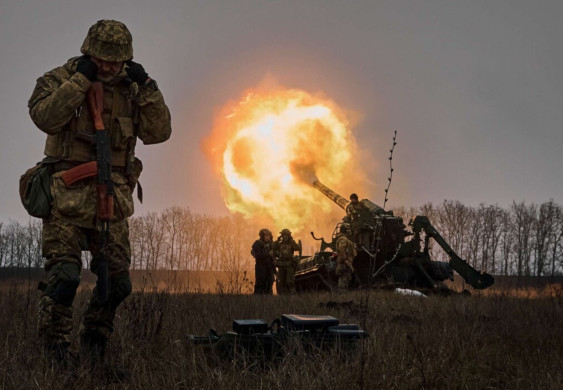
2024 was also a brutal year for Russia-Ukraine. While Russian troops dominated Kiev, making significant gains and advancing across eastern Ukrainian territories, the government of Vladimir Zelensky responded to Moscow's increased attacks by seizing part of Russia's Kursk region and launching a surprise counteroffensive.
According to the Russian Defense Ministry, in 2024 Moscow occupied almost 4,500 square kilometers of Ukrainian territory and was advancing at a rate of 30 square kilometers per day. Recently, Russia has been fortifying key areas, approaching the strategically important city of Pokrovsk in eastern Ukraine.
However, last week, a high-ranking Russian general, Igor Kirillov, who headed the military's radiology, chemistry and biology department, was killed in an explosion near the Kremlin in Moscow. Ukraine claimed responsibility for the attack.
Sergei Markov, a Russian political scientist and former adviser to Vladimir Putin, said that Kirillov was targeted not only by Ukraine, but also by the Americans because of the Russian general's campaign against US chemical and biological activities on Ukrainian territory.
In a speech in 2022, Kirillov described the Pentagon's activities in Ukraine as part of "illegal military and biological research" and accused members of the US Democratic Party of financing bioweapons activities in Ukraine. "I would like to draw your attention to Metabiota, one of the main Pentagon contractors, which receives funds from Hunter Biden's investment fund," he said.
Ukraine, in turn, accused Kirillov of using chemical weapons against its own population.
The year 2024 was also marked by a major Ukrainian cross-border operation against Russia's Kursk region. The Wall Street Journal described it as "the first foreign incursion into Russian territory since World War II." The operation was intended to demonstrate Kiev's resilience and its need for Western military support despite Russia's advances in eastern Ukraine.
Kursk, historically significant as the largest tank battle between Germany and the Soviet Union during World War II, became a symbolic battlefield again in 2024. The operation was a clear message from the Zelenskyy government to NATO countries: Ukraine is capable of fighting and deserves an increase in weapons supplies.
Israel's war against Lebanon
This year, Israeli aggression has spread beyond the Gaza Strip to neighboring Lebanon, which has been subjected to decades of incursions and cross-border attacks by Tel Aviv.
Israel's campaign against Lebanon began in September with the bombing of pagers and radios. The covert tactic has killed dozens and wounded thousands. Last month, Prime Minister Benjamin Netanyahu admitted that Israel was behind the deadly attacks.
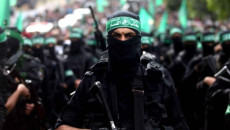
Israel then launched airstrikes in Lebanon, killing senior Hezbollah commanders and leading political figures. In late September, the group's longtime leader Hassan Nasrallah was killed, and in early October, Hezbollah's top figure, Hashim Safiuddin, who was expected to succeed Nasrallah, was killed in an Israeli strike.
In October, Israeli ground forces crossed into Lebanon for the first time since a 2006 military conflict between Hezbollah and Tel Aviv. It marked the Zionist state's sixth invasion of the small Mediterranean country. The Israeli incursion and attacks have killed thousands of Lebanese and wounded more than 16,000.
Hezbollah and Israel reached a ceasefire agreement on November 27, with both sides claiming victory for their own reasons. However, the fragile truce has been violated more than 200 times by Israeli forces, according to Lebanese officials.
The end of the Assad regime
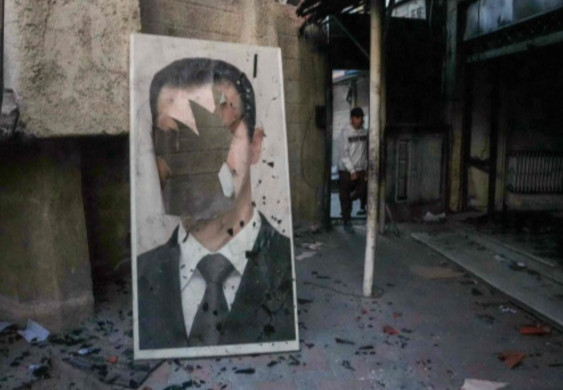
In 2024, the Baathist autocracy led by Bashar al-Assad was overthrown in Syria. The regime's grip on power through brutality and repression led to the deaths of more than 500,000 people and the displacement of nearly half the country's population during Syria's brutal 13-year civil war.
Armed anti-regime groups have never won a victory against the Assad regime, which is backed by Russia and Iran, during the long civil war that began in 2011 as a result of the Arab Spring, but they have never surrendered. Instead, they have retreated to Syria's northwestern Idlib province and resisted regime attacks.
In late November, anti-regime armed groups led by Hayat Tahrir al-Sham (HTS) launched a lightning-fast offensive. They quickly swept across northern Syria, capturing the country's largest and oldest city, Aleppo. They then moved on to Hama, a hotbed of anti-Baathist sentiment that had been oppressed by the Assad family since the 1960s.
The rapid capture of Aleppo and Hama, which had been out of opposition control during the civil war, signaled the imminent collapse of the Assad regime.
On December 8, anti-regime groups entered Syria's ancient capital, Damascus, unopposed. Regime forces disappeared, and Bashar al-Assad fled to Moscow with his family.
Following the fall of the regime, anti-regime groups formed an interim government led by new Prime Minister Mohammed al-Bashir and HTS leader Ahmed al-Shar'. They oversaw a largely peaceful transfer of power, bringing a sense of hope to the war-torn country.
"This is a message to all the oppressed and revolutionaries around the world: despite all the injustice and bloodshed, truth and the people will undoubtedly triumph," said Omar Alhariri, a Syrian journalist based in Daraa.
While the bloody Syrian conflict has ended relatively peacefully, conflicts in other parts of the world that are claiming many lives remain unresolved.
Sudan's 20-month civil war between the military and paramilitary forces has caused the world's largest displacement crisis and famine. The war has displaced 30 percent of the country's population and killed more than 24,000 people.
In junta-ruled Myanmar, the conflict between the military and anti-government forces has intensified this year, even though the International Criminal Court has issued an arrest warrant for the country's top military leader.
Prepared based on materials from TRT World.
Related to the topic
-
The UNSC resolution was not adopted for the third time because the US opposes the control of aid to Gaza.
-
The political crisis caused by the Syrian civil war has been deepening for years, and the collapse of Assad's army has exposed other factors.