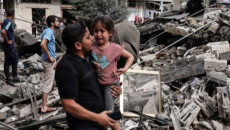


the war in Gaza
-
The first quarter of the 21st century will go down in history with the struggle of conflicting parties. On this front, second-tier countries are trying to form alliances to limit US hegemony, while America is trying to limit as much as possible the formation of such alliances that may threaten its strategic interests. If we pay attention to any war, conflict or political movement happening around the world today, it is not difficult to understand that it is supported by the above two factors. A look at recent geopolitical developments in Romania, Georgia, Pakistan, and the Middle East.
-
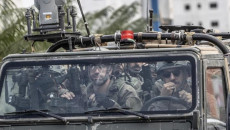
In Gaza, the resistance movement killed Colonel Ihsan Daksa, the highest-ranking Israeli officer since the start of the war, with an unexploded shell. Other officers inside the armored car were seriously injured. Ihsan Daksa is Druze and has recently been promoted for his "successes" in Gaza.
-
What is happening in the region is directly against the interests of Egypt. The country is sandwiched between regions of instability, such as Gaza in the northeast, Sudan in the south, Libya in the west, and the Red Sea in the east. In the Red Sea, attacks by the Yemeni Houthis on cargo ships bound for Israeli ports or in some way related to the occupying state have negatively affected the volume of international cargo transportation and led to a decrease in Suez Canal revenues.
-
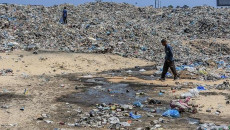
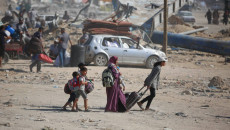
Not only millions of Palestinians, but also mother nature is suffering from the massacre that Israel has been carrying out in Gaza for a year. In the first 120 days of the war, as a result of Israeli attacks, up to 652 thousand tons of carbon dioxide gas were released into the atmosphere, which is more than the annual emissions of 26 countries.



-
Ending a war is harder than starting one. The party who wants to withdraw has to provide convincing reasons for this. The commanders will have to compare losses and gains, and say which of the goals set before the battle were achieved. It is crucial for a nation to understand whether it feels more secure at this time, or whether the hiatus is simply a respite to prepare for new conflicts.
-
It has been almost 11 months since the war with Hamas started. Although Israeli leaders continue to aggressively attack the Gaza Strip, the end of the war is not in sight, on the contrary, there are signs of a wider conflict, and the country's economy is strained. Since the beginning of the war, about 46,000 enterprises have been closed, 75% of which are small businesses.
-
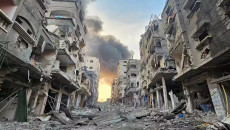
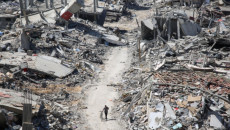
Overall, the world's military is responsible for 5.5 percent of global greenhouse gas emissions each year—more than the aviation and shipping industries. Queen Mary University of London recently concluded that the debris generated in the first 120 days of the latest massacre in Gaza was more than the annual waste of 26 countries - from a paper by researchers at Queen Mary University of London.
-
10% of hotels in Israel are on the brink of financial crisis. After the start of the war in Gaza, in the first six months of 2024, 969,000 tourists spent the night in the country's hotels, or 81% less than in the same period last year. The low number of tourists has a negative impact on the residents of Jerusalem, who provide hotel and tourism services.


-
Three Hamas prisoners, one of them an American citizen, were killed during a rescue operation led by US special forces in Gaza. 274 civilians were killed in this massacre, 698 people were injured.
-
Last week, Republican Congressman Tim Wahlberg of Michigan proposed destroying Gaza in the same way that the Japanese cities of Nagasaki and Hiroshima were destroyed by US atomic bombs at the end of World War II in 1945.
- 01
- 02